
 Sign In

The truth about cutting layouts
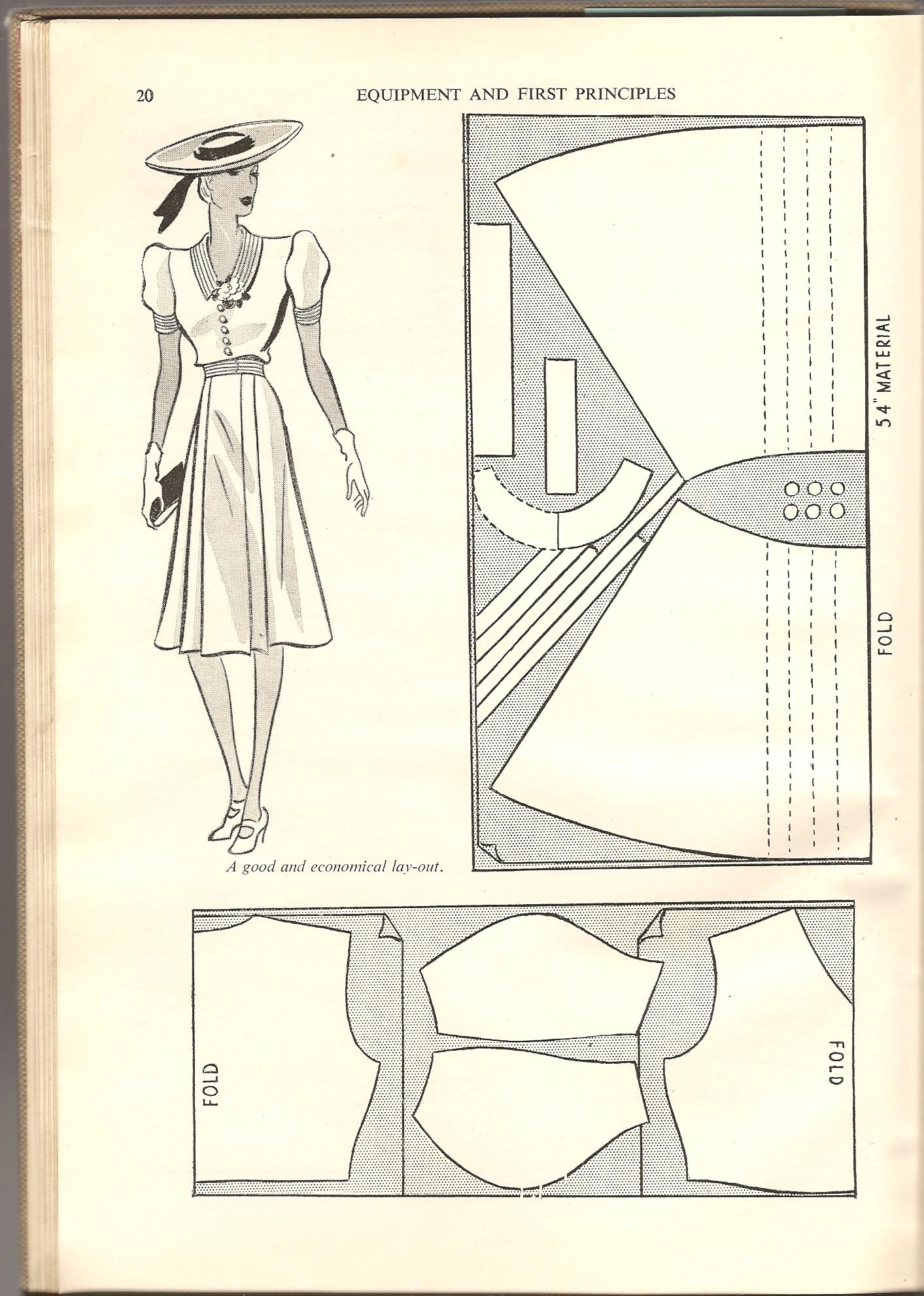
Let’s talk about cutting layouts. I’ve had a lot of experienced sewists tell me, “I just ignore the cutting layouts that come with patterns.” They say that they can usually find a more economical layout without them. Does that seem odd to you? Isn’t the whole idea of the cutting layout diagram to show you the optimal way to cut your pattern in order to save fabric?
I’m going to let you in on a little secret: they aren’t perfect. And it’s not fault of the designer or manufacturer. Here’s why:
Most patterns today come in a variety of sizes. Our patterns come in sizes 0 to 18, for example, but the same instructions are used for all of these sizes. Each of these sizes probably has its own ideal cutting layout that conserves the most fabric. A size 6 and a size 8 might seem to be close, but each individual pattern piece is probably a slightly different size, and so the layouts that save the most fabric could be totally different!
So if the sewing pattern creator wants to truly represent the best layouts, there would probably be a different layout for every single size. And if there are multiple variations, you can imagine how many layouts this could be. More than half the instructions would just be layouts, and it would probably also be sort of confusing, maybe even annoying. It’s probably not worth it to save a few inches of fabric, right?
Instead, we show something that is pretty close to ideal, but maybe not perfect. If there are significant savings between larger size layout and small size layouts, I’ll show both, but if one layout will be pretty darn good for everyone, that’s the one that will be printed.
All this means that, yes, it is possible you can find a layout that’s even better than the one that came with your pattern. So feel free to experiment if you really think you can save a bit of fabric! Just make sure you double check by positioning your pieces before you cut.
{image above: courtesy of CollectoratorToo}

Comments
Joni
October 20, 2010 #
I ignore the cutting layouts for the same reason I largely ignore the sewing instructions: because I am a stubborn little thing who has to do things My Way, all the time. It’s a bad habit, but it gets results.
Casey
October 20, 2010 #
I am one of those sorts who tend to ignore the cutting layouts. It is, however, necessary to make sure when deviating from the provided cutting layouts that the grain lines marked on the pattern pieces are still observed, as well as the number of pieces you need to cut. Sometimes I’ve found that when using a length of material slightly shorter than what is called for, and disregarding the cutting layout, it’s easy to forget to double check the grain and pieces list!
♥ Casey | blog
Sarai
October 20, 2010 #
Yes, good point! It is a lot easier to make mistakes, especially regarding the number of pieces you need to cut, if you’re going it on your own.
ladykatza
October 20, 2010 #
I completely understand the lay-out instruction problem. Truth is I always try to by a little extra fabric for shrinkage purposes and then experiment with layout (pattern/nap/grain being important). I would say 3/4 of the time I end up with enough fabric left over to make my daughter something or give it to a friend that makes and sells doll clothes for a living.
Of course, if you are really tight on the budget, you can always experiment with similar width fabric to determine how much you REALLY need and then go do your buying.
Sarai
October 20, 2010 #
Yes, and if you are doing a muslin, that’s a great time to figure out a good layout before you buy more expensive fabric!
Suzy
October 20, 2010 #
I’m by far an experienced sewist but often notice that I could change the layout and use much less fabric, obviously checking I’m cutting on right grain, etc. But then I usually cut small sizes so it might be for that matter.
Gorgeous Things
October 20, 2010 #
I like to say, regards cutting layouts and instructions: “They’re guidline, not gospel.” The designers do what they can with the resources they got. And as one gets more experienced, s/he uses what works for them and doesn’t use the rest. It’s a natural progression, I think.
Sarai
October 20, 2010 #
Yes, exactly… I feel pattern instructions are a fantastic place to start, but you do start to learn and apply new techniques as time goes on.
I think transitioning from that first stage to having the confidence to make your own technical decisions is a bit of a hurdle. But once you start learning, so many creative possibilities start to open up!
Carla
October 20, 2010 #
Phew, I had a very quick intake of breath when I read the title and thought oh no I’ve been doing it wrong all these years. So I’m very much relieved that they are “guidelines, not gospel” as Gorgeous Things put it (very apt quote).
Leigh
October 20, 2010 #
Glad to see it’s not just me. I’m always convinced I can squeeze the pieces closer together than they’re shown in the layout. I keep every little scrap of fabric, so if I can use less than originally planned for a project, I’m a happy camper.
Sewer
October 20, 2010 #
Simply reducing the seam allowances from 5/8″ to 1/2″ saves fabric.
I always make a list of the pieces I need, or circle them on the pattern.
Jessica
October 20, 2010 #
I usually make a bunch of petite adjustments to my pattern pieces [I’m 5’2″ and its typical for me to take 2-3 inches in length out of skirts, blouses, dresses, etc.], which often changes up how economically a pattern can be cut.
Tasia
October 20, 2010 #
Great post and excellent points! I’m one of the ones who thinks they can do better and get creative with my layouts.. you’re right, they are just guidelines.
There’s nothing worse than not buying enough fabric though, so I’d much rather end up with a little left over fabric, than not have enough for my project!
Becky
October 21, 2010 #
Chiming in to add the same-I pay attention to the grain lines and I usually cut 1/2″ seams. At any given season I may sew something up from my stash without shopping for specific yardage. I like the challenge of eeking out the best layout and I’m pretty stingy : )
Kati
October 21, 2010 #
I ignore pattern layouts because I’m usually making the smallest size. I use the layout as a starting point but usually I can fit averything on a smaller piece of fabric, yes it saves fabric but what am I going to do with the hodge podge mix of 1/2 yd to 3/4 yd pieces of fabric that I saved? Nothing! I’d rather just use up all the fabric on that garment by following the pattern layout.
Natasha E
November 26, 2012 #
Well if you knew the layout was going to require less fabric then you could buy less. I was disappointed to find that the yardage recommendation for Anise was off by 1 yard even with me laying out for the largest size which is why I checked before buying fabric. Maybe you only save a snip here and there but if you can save it before you buy it you can afford to buy more patterns
Nathalie
October 25, 2010 #
I find pattern layouts are mostly useless because I sew a lot with one-directional prints. Pattern layouts are useful ‘without nap’ but the idea that you just have to add a half yard ‘with nap’ is fanciful, especially if you’re sewing vintage in larger sizes (which really gobbles up fabric). Also there’s a real pleasure in ‘saving’ as much fabric as possible, but if you’re not into crafting and quilting, what do you do with it? I have bags of left-overs that I hold onto for some mythical time where I might quilt, but let’s face it, when is that ever going to happen?!
Susan
October 31, 2010 #
Very true facts. differing pattern sizes are one issue. the other is that fabric widths are not always completely standard. An extra inch of width can make a huge difference in regard the optimal layout.
Another issue is that I often will cut out one section of the garment only. after tweeking it I may make alternations in other sections. This renders the pattern suggested layout pretty useless for me.
Marie-Chrisitne
November 4, 2010 #
It’s completely true that fabric layouts used to be not so efficient, due mostly to the fact that they didn’t account for different sizes, because each layout represented a lot of manual labor. And I’m a geek into topology, so I could usually do much better. But modern patterns do account for size. And modern fabrics are much more standard width. In the 80s somewhere, software took a big leap, and now I find in fact that I can usually hardly save any fabric from doing my own layout, but can spend a lot of time at it :-). Guess what I choose to save now?
Sarai
November 4, 2010 #
Marie-Christine, they do account for size, but only to a certain extent because they don’t have different layouts for EVERY size. It would be too cumbersome.
I definitely agree (and it sounds like others do too!), it’s a trade-off between your time and saving a teeny bit of fabric, since the layouts are usually pretty good!
G
November 19, 2010 #
Thank you for this post! This is especially true if your fabric width is different than what the pattern calls for, e.g. 150cm instead of 140cm. It’s incredible how much difference 10 cm can make sometimes!
BUT you also have to be careful. I recall being super proud to have used almost half as much fabric than was indicated, only to notice that the pattern was intended for fabrics with a nap, which I hadn’t taken into account! So some pieces went with the nap and other against. Annoying!
Vanessa
January 25, 2012 #
And then there are those of us who sew because regular clothes often don’t fit (I’m 6 ft), and thus have to adjust everything (lengthen for me) and even more the pattern layout provided is just a nice theory . . .
Kayleigh Garner
November 15, 2012 #
I never follow the pattern layout for this very reason. I do of course ensure to adhere to grain directions!
Susannah
February 27, 2013 #
I’ve never paid much attention to layouts in the patterns. I did a lot of my learning to sew while watching or helping my mother, who also always ignored the layout, and always got the pattern out in less fabric than suggested. As an inveterate purchaser of fabric with no specific pattern in mind, I often have attempts to cut out a pattern in less fabric than suggested. Sometimes I am disappointed, but mostly it works. By way of example, I managed to squeeze a Sorbetto out of a mere metre of fabric. And what a little treasure that was!!! You just have to love something that is a free pattern, no buttonholes or zips, and a little gem from the stash that is too small for anything else!
Helen
March 22, 2013 #
I have started (after buying too much fabric one too many times) measuring the pattern pieces out first on my table (after marking my fabric width, halved), as I am fed up with having too many small pieces of fabric hanging around the house – and as someone said above, buying less fabric, means buying more patterns!
I do get a perverse sense of pleasure in squeezing something into a metre of fabric! Suddenly more expensive fabrics become doable!
Soozie
March 24, 2013 #
I find that I’m so keen to have the finished product and so keen to improve that I rush through my projects without taking the necessary care. I’ve never really had a hobby that I have to work at before so it can be quite humbling at times when I can’t do things. I just need to slow down, take my time and focus on my technique. Ahh I’m so used to instant gratification! I’m learning though :-) Great post!
lo
May 16, 2013 #
definitely true.. i could relate… Making mistakes for me is a learning process. I tend to be a little rusher too as i see my work morphing really nice. But to look at sites like these and the detail + precision all are indeed humbling. Lets Practice, practice, practice!
lo
May 16, 2013 #
I just started sewing… I love cutting but dont follow exactly the same as what a diagram would show, rather I draw it out personally then cut.
Adela
August 20, 2013 #
I have been sewing for almost thirty years and do not follow cutting layouts. But, through the years I have had few occasions in which in my quest to save fabric I have forgotten to follow the grain of the fabric, uhps!!! So, it is important to be able to save fabric (specially on expensive ones or short pieces) but always remember to follow the grain of the fabric.
Laura After Midnight
November 1, 2013 #
I am simply terrible- and a full time Sewer and Designer so budget restrained- I’ll often buy less because I want to save money, then make the Pattern work for me! This system has been developed over many years, and I do strictly adhere to the Grain Lines however; it has produced some great results as I have put different sleeves or Skirts on things, put in less pleats, or generally just switched it up to make it a little more ‘me’ and I feel this way of doing things encourages this! Saving fabric, money and being creative… … yay!!