6

Friday Link Roundup

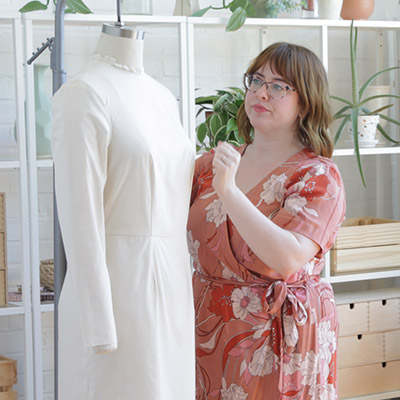
This week I found myself matching some of our studio plants. I picked up this crazy linen ikat fabric over a year ago and just made it into a sleeveless version of the Licorice dress from the Colette Sewing Handbook. Don’t you love the pink planters Sarai picked out for the studio? The plants are so bright and tropical looking.

The foliage on this plant in particular is stunning. I love the painterly look of each leaf. We recently had to treat it for some teeny tiny spiders that were crawling all over it. Poor plant! It’s recovering now and growing some bright new leaves.

Sarai brought in some more paperwhite bulbs that are sprouting up quite a bit every day. While we don’t have any direct sunlight in our studio, we do have lots of indirect light. So far it’s been enough to keep all our colorful plants alive and thriving.

I love having this jungle of plants in the studio. There’s something so warming and homey about live plants indoors, don’t you think?

I hope you enjoy these sewing (not plant!) related links I put together for you:

  • Since it’s time to start sewing with summery lightweight fabrics this rolled hem tutorial will come in very handy
  • This tutorial shows you how to make those sewing fingers all fancy
  • Make a cute maxi dress and learn to dye it with this tutorial
  • Learning about your machine’s thread tension doesn’t have to be scary, this Threads article breaks it down for you
  • Gertie’s scissor post discusses the different kinds you need to get the job done
  • And speaking of scissors, if you don’t use a rotary cutter, this tutorial shows you how (it’s our most used tool here at CP!)
15

Palette Challenge: Caitlin’s Minty Meringue

After seeing so many cute Meringue skirts in the forum and flickr pool, I knew I should make one for myself. I need some separates and thought this would fit the bill! I decided to make the skirt out of seafoam wool gabardine to stick with my color palette. One thing I really love about this wool gabardine is that it doesn’t wrinkle very much and it was really easy to work with.

As far as fitting, I only had to lightly grade it from one size to another along the hipline. Easy peasy. The scallops are a bit wonky in places because I didn’t step away and take a breather when I should’ve. This pattern is one of the fastest, and dare I say easiest, from the Colette Sewing Handbook.

I was inspired by some of you who used contrasting fabric for the facings. What a great idea! I used this pale rose fabric that may be polyester, I haven’t done a burn test but that’s what I expect it is.

We had some delightfully hot and sunny weather recently and while the skirt is wool, it’s very lightweight so I wore it despite the heat. Plus, I had to get some shots in the sunshine!

Only one more garment and I’ll be finished with my challenge. Three has been a manageable number for me this time around! How about you? How’s your sewing coming along? Anyone else making the Meringue skirt?

13

Detail Inspiration: Color Blocking

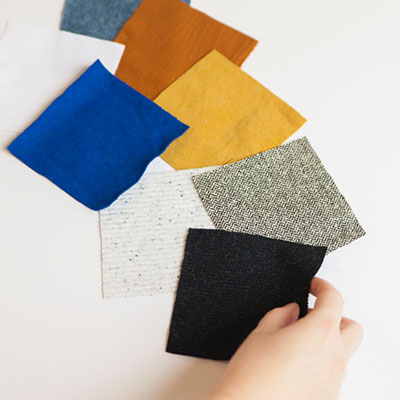
Color blocking is a great way to add interest to a simple design. It’s also a fun way to play with color. I’ve always loved the multicolored paint chips at hardware stores and I think just doing a gradient of one color would be lovely.

You can definitely go wild with color blocking and cut out different shapes and sizes. This sweater dress is flush with patterns made by different geometric shapes. It’s easy to go a little wild, and I prefer the more graphic look of sixties dresses. Especially ones that look like Mondrian paintings.

If you try color blocking, think carefully about the placement of colors, the size of the blocks and where they fall on your body. Do you have experience making a color blocked garment? What colors would you choose or what type of garment would you make out of color blocking?

Images: Isabel Marant Dress, Heidi Merrick Dress, Vintage Pattern, VintageKnitting Pattern

45

What to do when taste and body don’t match?

{image above: gorgeous 1920s dress from Dear Golden Vintage}

What do you do when the clothes you love don’t match your body type?

I’ve always been a curvy girl. I’m absolutely fine with this. I decided long ago that, given that I only have one body in this life, it’s sort of tragic to go through life hating it or wishing it were different. I try to keep it healthy and strong and celebrate all of its positive qualities rather than lamenting that it’s not movie star perfect.

But there’s one point on which I get a little hung up. I still love skinny-girl clothes.

Don’t get me wrong, there are plenty of things I love to wear that look great on a curvaceous figure. In fact, most of the things I like to wear are things I enjoy for that reason: I think I look good in them, so I feel comfortable in them.

But two of my favorite fashion eras, the 1920s and the 1960s, are known for glorifying the thin, small-chested, youthful, and boyish silhouette. These styles weren’t designed with my body in mind. But I love them, nevertheless.

What do you do in this situation? Wear them anyway because you love them? Worship them from afar?

I think knowing how to sew can be so helpful in this case. One thing I’ve found that works is reinterpreting the styles I love in a more flattering way. That can mean adding a bit more waist definition to a cute 60s style shift dress. Or maybe cutting a loose flapper-style dress so that it skims your curves. There are lots of ways to take a style that isn’t inherently flattering on me and make it work.

Do you stay away from styles that you know aren’t ideally flattering for you? Or try to make them work?

8

Featured Seamstress: Caroline

Name: Caroline

Skill Level: Intermediate

Pattern: Macaron

Her Blog: Miss Jackson Design

Her post about the pattern: Spring Macaron

What kind of fabric did you use? Light blue cotton for the shell, vintage hand-dyed kimono silk for the contrast and pockets. The whole thing was actually just a trial to use up some fabric I had lying around but it worked out really well.

How did you decide to reflect your personal style in the pattern? I just wanted to add a bit of flair to the dress since the cotton was so plain, then I came across the silk in a damaged kimono I was given, so I thought using that was a good way to make it more exciting.

What thoughts do you have about the project? The pattern is fantastic – a really nice cut, fit and feminine design, and I especially like the cute sleeves! I had to add a front and back seam in the contrast pieces due to a lack of silk, but hopefully it isn’t too noticeable. I love the dress and will definitely be making another version or using parts of the pattern for other projects soon.

Thanks, Caroline!

Older